
By Rich Bowden
The newly-installed NSW Liberal Government has received widespread criticism for its recent decision to retrospectively reduce the tariff paid to households under the solar bonus agreement.
By Rich Bowden
The newly-installed NSW Liberal Government has received widespread criticism for its recent decision to retrospectively reduce the tariff paid to households under the solar bonus agreement.

As the fireworks erupted from Sydney Harbour Bridge at 12:01am January 1 2010, the NSW Solar Bonus Scheme opened for business. It means that NSW solar panel owners will be able to collect 60c for every kWh produced for at least the next 7 years.
It will be available to panel buyers until all the installed generators under this Scheme reach 50 MegaWatts.
Panel owners who are eligible are the small electricity consumers. They are those consuming up to 160 megawatt hours of electricity annually.
Generally, this includes typical households,schools, small businesses and most community organizations.
Under this scheme, people will be able to get Solar PV Systems and Wind Turbines up to 10 kiloWatts in size.
According to Energy Minister John Robertson, the industry is expecting to install around 33,000 new solar systems during the life of the program.
The government is banking on solar PV costs decreasing over the next few years. Many are expecting that within the next 3 to 7 years, solar energy’s unsubsidized cost to consumers will be near that of dirty fossil based generation.
But in the mean time, the NSW Gross Feed In Tariff is giving a head start to the NSW solar industry so they can tool up, scale up and bring costs down and ROI up for Solar PV buyers.
Let’s hope the Feds watch and learn!
Yesterday the NSW Government surprised renewable energy fans by switching the new feed in tariff from a net to a gross tariff.
This means that owners of solar systems in NSW will now get 60c per kwh for all the electricity they generate.
Previously you were only going to get paid for the power exported to the grid (i.e not the power you used in your house)
This makes a huge difference to the economics of buying a solar power system in NSW.
Plugging the numbers into my solar calculator shows that a good quality 1.5kW system will pay for itself in just over 4 years.
In fact you’ll be getting around $120 per month of income from the outset. And the benefits will only go up as electricity prices rise.
Even if you take out a $7000 loan at 7% interest the system would be cash flow positive from the outset. See for yourself here.
That’s a better return, and much lower risk than most other investments these days.
Have a play with our solar calculators to see if it makes financial sense for you. Just put ‘Feed In Tariff %’ as 100% and ‘Feed In Tariff Price’ as 60c and the calculator will work out the payback and monthly savings.
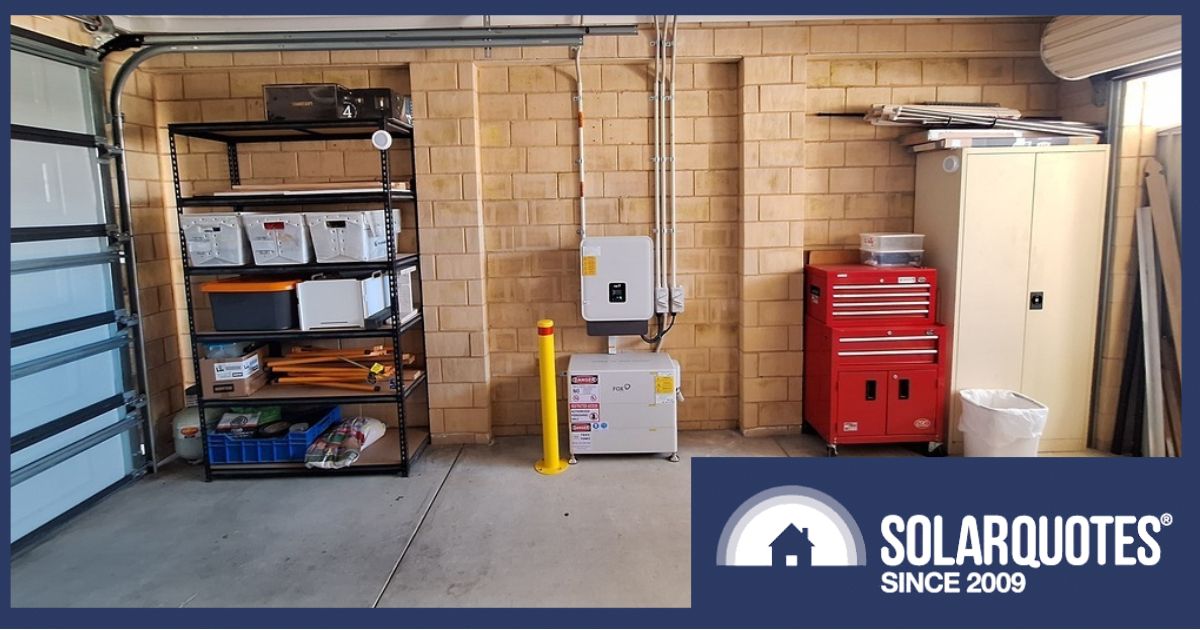
If you’re building a new home, the best time to plan for solar, a battery, and EV charging is before the walls go up.
That’s what licensed builder Oliver Alameri from Sydney’s Buildana says.
We interviewed him about why to plan solar from the beginning of your build, what often goes wrong, and how to plan for an all-electric new build.

How much cheaper is it to drive an electric vehicle than a petrol car? The answer depends on what you drive, what you pay for energy, and how you charge your EV.
Charging from the grid can already offer substantial savings, but rooftop solar and free-electricity periods can make quite a difference.
SolarQuotes recently released an EV Charging Cost Calculator that lets you compare these options using your own figures. We’ve put it through its paces with three examples to show how it works and what the results mean. [Read more…]

The Clean Energy Regulator (CER) has permanently suspended Solar Power Nation from the federal solar rebate scheme. This means the Sydney-based retailer, which is promoted by former Australian cricket captain Michael Clarke, can no longer issue the federal solar and battery rebates as an upfront discount to customers.
This is the biggest setback so far for a company that, as we reported in August, has faced hundreds of complaints and investigations across three states. Solar Power Nation, legally known as 1 Solar Australia Pty Ltd, has 60 days to ask the CER to review the decision.
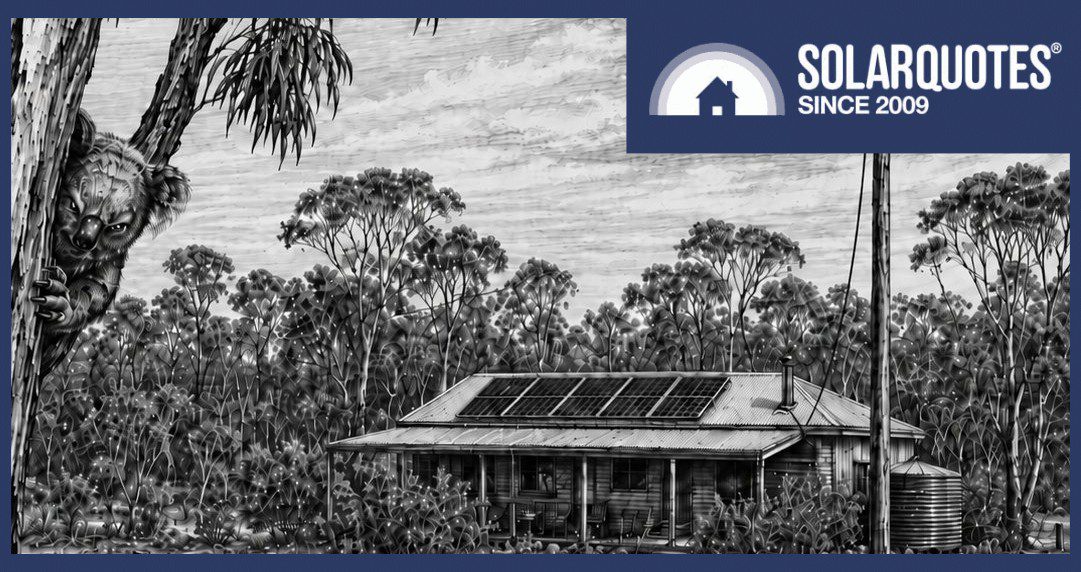
Earlier this year, out of the goodness of my heart — along with a fervent desire for that heart to remain within my chest — I worked out what battery size my sister should buy for her home in rural NSW. Now I’ve been told I have to decide which VPP she should join. For my part, I intend to give it my all, in the hope that when I’m done, I’ll still have all my parts. [Read more…]
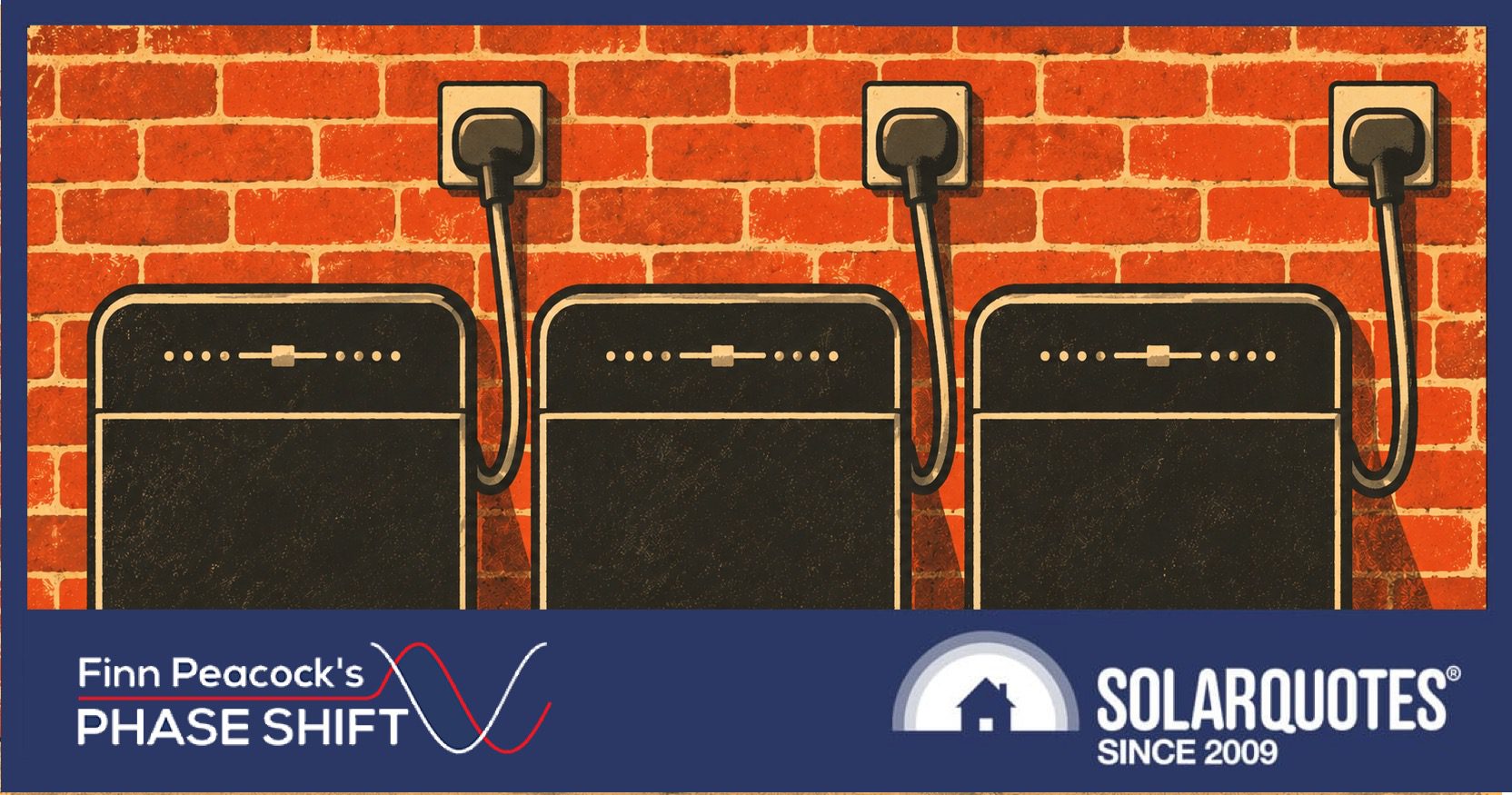
WA is about to become the first state to legalise plug-in solar and batteries. The draft standard, modelled on Germany’s rules, is open for comment until 9 December. [Read more…]
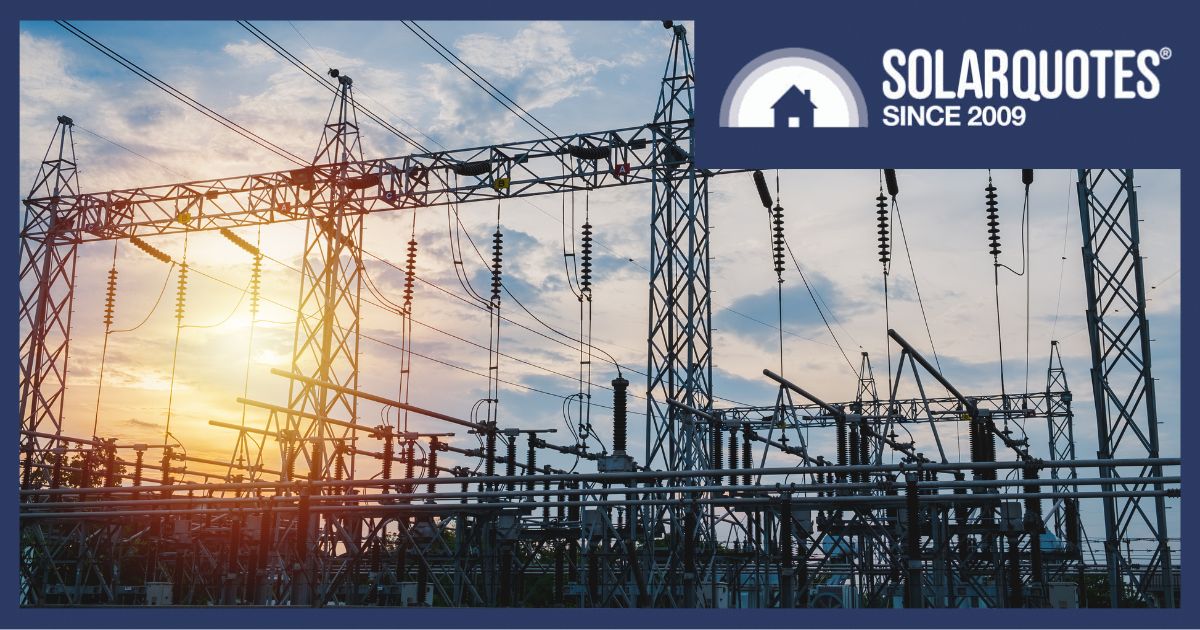
Rooftop solar generates around 14% of Australia’s electricity demand, as more than one in three freestanding households own a system. Our electricity system operator needs an emergency plan for the rare occasions when multiple things go wrong, and uncontrolled rooftop solar generation threatens system security. NSW is set to be the latest Australian state to introduce an Emergency Backstop Mechanism – here’s what it all means.
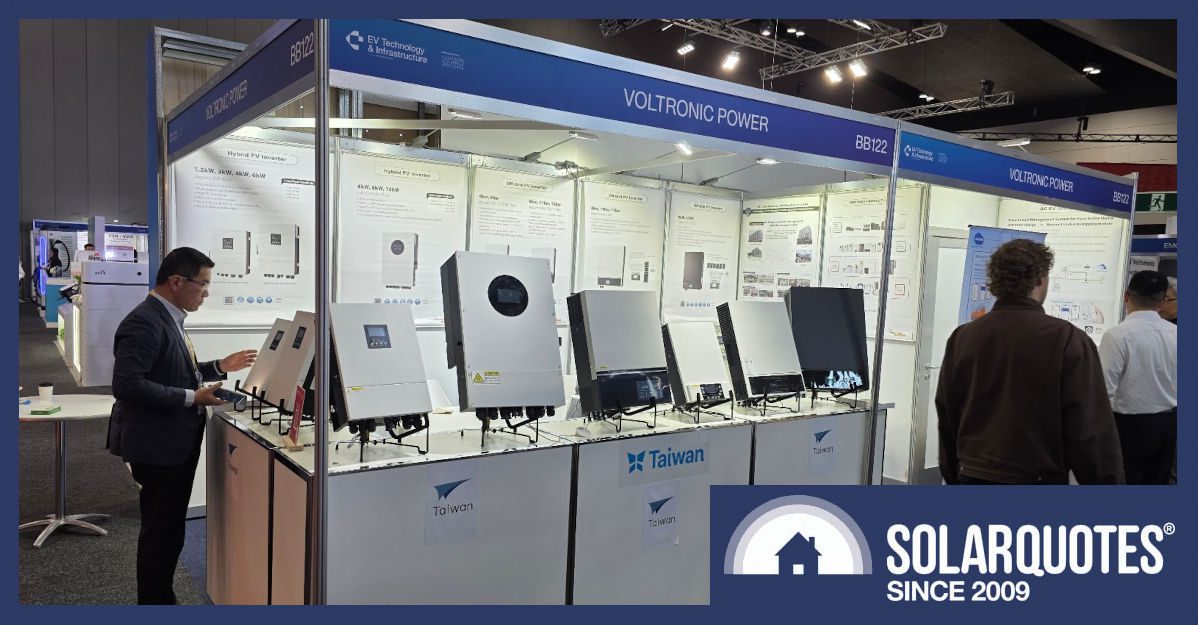
Solar industry Christmas has just rolled around again, and like the rest of the renewable industry it just keeps growing. From insulation tips to the latest solar gear, here’s an account of this installer’s adventures at All Energy Australia in Melbourne. [Read more…]
 Finn Peacock (RSS) (399)
 Ronald Brakels (RSS) (516)
 Michael Bloch (RSS) (3363)
 Staff Writer (RSS) (261)
 Richard Chirgwin (RSS) (159)
 Trevor Glen (RSS) (2)
 Anthony Bennett (RSS) (248)
 Kim Wainwright (RSS) (148)
 Pat Southwell (RSS) (19)
 Neerav Bhatt (RSS) (7)
 Max Opray (RSS) (55)
 Toby Hagon (RSS) (1)
 Baran Yildiz (RSS) (3)
 Tim Johnston (RSS) (6)
 James Norman (RSS) (1)
 Jacob Boyd (RSS) (22)


Before You Go..Download the first chapter of The Good Solar Guide, authored by SolarQuotes founder Finn Peacock, FREE! We respect your privacy and you can opt out from the newsletter at any time. |
 RSS - Posts
Currently Raging Debates: