

Home batteries are often promoted as a way to keep the lights on when the grid goes down.
But according to a new report from the Australian Energy Market Operator (AEMO), they may increasingly be helping keep the grid up in the first place.
WA’s latest Electricity Statement of Opportunities (ESOO) shows the state’s electricity outlook has improved significantly compared with a year ago. New generation projects, large-scale batteries and other investments are all strengthening the forecast.
Among them are growing numbers of household batteries that AEMO expects will work together to reduce pressure on the grid during periods of high demand.
Why Has WA’s Outlook Improved?
AEMO isn’t a think tank or lobby group. It’s the organisation responsible for operating Australia’s major electricity markets and planning for future electricity supply.
Each year it publishes an Electricity Statement of Opportunities, which assesses whether enough generation capacity is expected to be available to meet future demand.
Last year’s report painted a relatively tight picture for the years ahead. This year’s report is considerably more optimistic.
AEMO says the forecast supply outlook has improved substantially, with existing and committed projects now expected to provide a comfortable surplus of capacity through the period where shortfalls had previously been anticipated.
The improvement comes from a combination of factors, including new generation projects, large-scale batteries and updated assumptions about future supply.
What Role Are Home Batteries Expected To Play?
One of the more interesting details in the report is that AEMO is also counting on household batteries to help support the grid.
The ESOO forecasts coordinated home batteries reducing annual peak demand by around 200 MW in 2028-29. To put that into perspective, that’s roughly equivalent to a small power station’s worth of demand reduction occurring when the grid needs it most.
The modelling assumes hundreds of megawatts of distributed battery capacity will be available through virtual power plants (VPPs) and other coordinated programs.
In simple terms, batteries sitting in garages across WA can be charged and discharged in a way that helps reduce strain on the grid during periods of high demand.
Individually, a home battery may not seem particularly significant. Collectively, thousands of them can begin to make a meaningful difference.
The Irony Of Backup Power
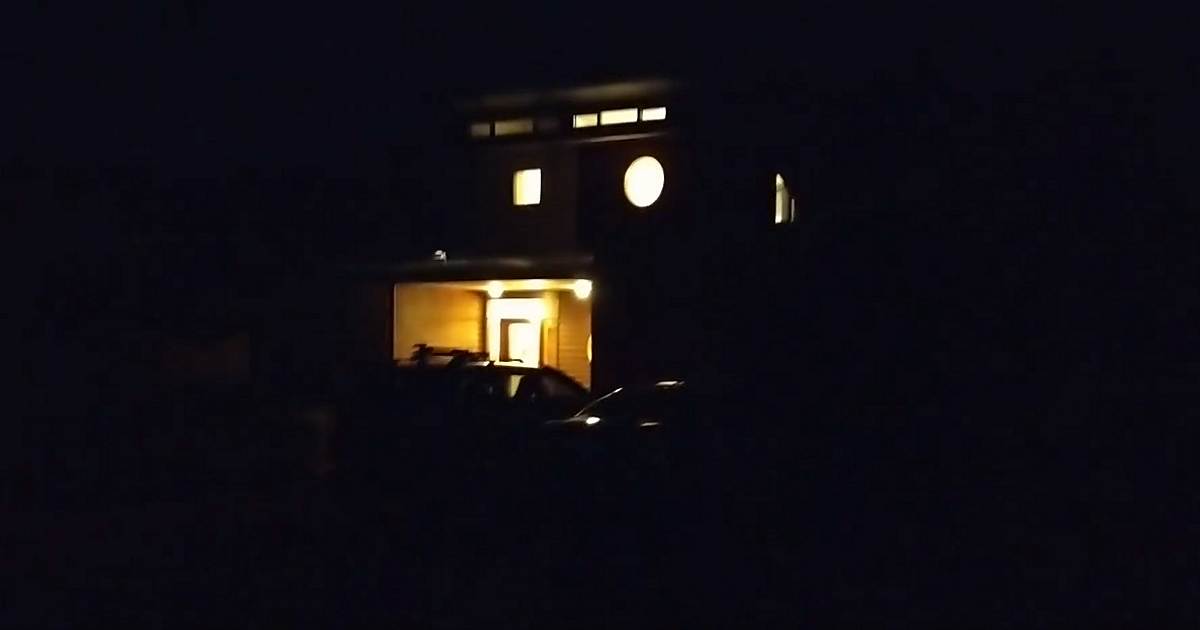
SolarQuotes founder Finn Peacock’s home battery meant his place was the only house on the street with the lights on during a blackout, but batteries are becoming so plentiful blackouts are set to be prevented in the first place.
There’s an interesting irony here.
Many people like the idea of a battery because it can provide backup power during a blackout.
Yet as battery numbers grow and coordination improves, those same systems may increasingly help reduce the likelihood of blackouts occurring at all.
The battery sitting in your garage won’t keep the electricity system running on its own.
But according to AEMO’s latest planning assumptions, thousands of batteries working together could become an increasingly important part of how the broader grid stays reliable.
For more on batteries and blackouts, read about the different levels of blackout protection batteries offer to a home.
 About Kim Wainwright
 RSS - Posts





“Among them are growing numbers of household batteries that AEMO expects will work together to reduce pressure on the grid during periods of high demand.”
Expects, right.
Then the powers should stop to the diminishing rewards for people investing in solar / battery.
1c FITs and 57c peak tariffs for 13 hours a day is not much of a reward for investment by solar / battery owners.
“One of the more interesting details in the report is that AEMO is also counting on household batteries to help support the grid.”
and
“. . . batteries sitting in garages across WA can be charged and discharged in a way that helps reduce strain on the grid during periods of high demand.”
So 2 options.
1. Give more rewards for the grid support.
2. Some sort of changing rule to force it, perhaps tied to battery rebate terms ‘must be VPP compatible’.
Les,
Option 1 is the most reasonable. Investment warrants reward, consumption pays in any balanced system – it’s what we sign up for by living here, not Russia. However, after a long distance shopping trip today, and an early trip on for tomorrow, I let the BEV charger run for a while after sunset. The FiT-on-wheels is $1/kWh. The grid would come third, after other self-consumption.
Last I looked, global solar deployment rate was 1 GW every 15 hrs. That’s a full-sized coal power station. Time-shifted demand becomes a non-issue once we’re deploying 1 GWh of batteries every 15 hrs. Na+ batteries are purported to cost US$40/kWh in 2027. At twice the cycle life, that’s better than US$20/kWh for LFP. Paying US$2000 for 100 kWh means we can all have one of them, and grid storage can have a million … every few months.
Fretting about storage is a temporary worry, confined to this pioneering moment in the exponential lunge to cheap energy surplus – even with +4 billion aircons by 2050.
Clearly those who have batteries can export to prop up the grid during high demand periods,…. but let us not forget that even when these batteries do not export their owners have reduced their prior share of grid demand , thus the peak demand is reducing also.
I wonder how much peak demand is shaved even now?
And of course those who adjust their hot water tank reheating time to midday will also save $ and reduce the nightime demand to also reduce battery or night generation requirements.
Perhaps and interesting story to tell just how significant this is already?
Hi Tim.
“when these batteries do not export their owners have reduced their prior share of grid demand , thus the peak demand is reducing also.”….
Good point, and a good idea for a SolarQuotes article. It’s not mentioned in the AEMO report but there’s plenty of evidence around that shows that in itself has helped to flatten the duck curve. Obviously not enough though, as they need people to sign up to VPPs. And to think they’ll actually do that is a huge assumption! More on that coming in SolarQuotes blogs.
Well I’m glad AEMO has a better outlook for the future. I am however very surprised they think there is an iota of good will left that would have the solar / battery system owners even consider allowing some sort of centralised control of their systems…
One would have thought the sign up rate for VPP’s might have given them some sort of hint about that…
In NSW we have a solar and battery VPP provider (Amber) who give us wholesale buy and sell prices. We can be penalised for grid use in high demand but also rewarded with market rate feed on tariffs. In peak supply (11-4) this can be a negative feed in tariff too. Amber manage it and we retain absolute control.
Allowing all owners to act as a energy provider makes sense. It rewards our choices and our investment. But its not for all.