
Electricity pricing has become so complicated that Australia’s energy rule-maker wants future power plans to be as easy to understand as buying milk.
That’s one of the key messages from a major Australian Energy Market Commission (AEMC) review released last week, which sets out a long-term roadmap for simplifying electricity pricing as rooftop solar, home batteries and electric vehicles become increasingly common.
“Rather than consumers being forced to understand demand charges, export charges, time-of-use windows and locational signals to get the best deal – we want to make their experience more like buying milk,” AEMC Chair Anna Collyer said at Australian Energy Week earlier this month.
The review’s recommendations include measures aimed at reducing so-called loyalty taxes, improved energy plan comparison tools, simpler retail plans and gradual reform of network pricing over the coming decade.
Why Simplify Electricity Pricing?
According to the AEMC, many consumers are finding electricity increasingly difficult to navigate, with a growing number of tariffs, plans and energy services making it harder to compare offers and identify good value.
The Commission says the problem is likely to grow as more households install solar panels, batteries and EVs, creating new opportunities to use, store and manage electricity in different ways.
Its answer is to make electricity pricing simpler for consumers while shifting more of the complexity behind the scenes to retailers and energy service providers.
As the report puts it, consumers should be able to access good value without needing to become electricity pricing experts.
Four Recommendations, One Direction
The review contains four recommendations:
- tackle so-called loyalty taxes that can leave long-standing customers paying more than necessary, requiring energy providers to notify customers if they have been paying more than better available offers, and report on how many customers are affected;
- improve electricity comparison tools as plans and energy services become more complex;
- simplify retail plans by shifting more pricing complexity behind the scenes, and introducing stronger incentives to use/share energy in ways that lower system costs; and
- regularly review consumer outcomes and remove unnecessary regulation.
Of those, the third recommendation is arguably the most significant.
The AEMC wants simpler retail plans, with much of the underlying complexity managed by retailers and energy service providers rather than households. The Commission believes this will make it easier for consumers to benefit from technologies such as solar, batteries and EVs without needing to become experts in electricity pricing.
What It Means For Solar Households
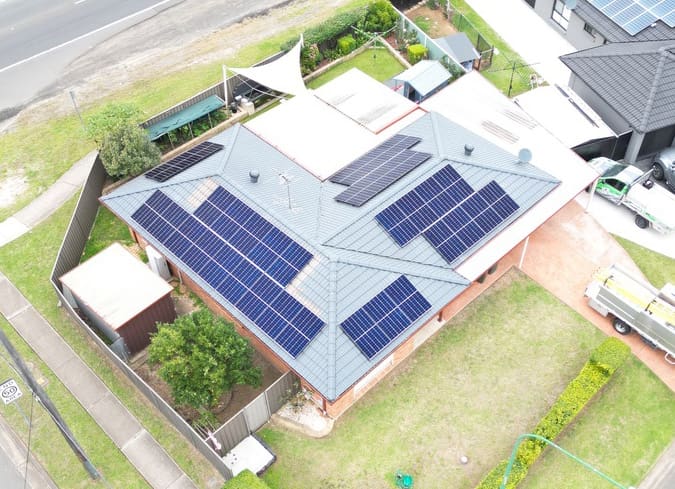
A Clean Earth Solar install.
Solar, home batteries and EV charging sit at the centre of the review.
The AEMC argues that households should be rewarded when their energy use, storage or exports help reduce pressure on the grid and avoid unnecessary network investment.
At the same time, the Commission says the existing framework is coming under increasing strain as more consumers generate and store their own electricity while continuing to rely on the shared grid.
The review has not been without controversy. Earlier modelling published during the consultation process suggested some households could be better off under future pricing arrangements while others could be worse off, prompting debate about how network costs should be shared in a grid increasingly shaped by solar and batteries.
Not everyone will necessarily agree that simpler is always better, either. While many consumers may welcome less complicated plans and tariffs, solar and battery owners often rely on detailed pricing information when weighing up investments and estimating potential savings.
The draft attracted 2,700 submissions in response to the draft proposal, including 1,600 Solar Citizens supporters opposing a proposal to increase fixed daily charges.
Solar Citizens CEO Heidi Lee Douglas welcomed the lack of concrete plans to increase fixed charges in the final report as a sign that people power had won out.
“Households have spent more than 25 billion dollars of their own money installing rooftop solar and batteries because they want lower energy bills, greater energy independence and a cleaner energy future. “They do not want to see energy market rules that undermine those investments or shift more costs onto consumers through higher fixed charges… we’ve shown that when consumers speak, decision-makers listen,” Douglas said.
A Long-Term Roadmap
For now, however, the review is more about setting direction than introducing immediate changes.
Many of the recommendations would require further consultation, rule changes and industry transition periods before taking effect, with the most significant pricing reforms expected to unfold gradually over the next decade.
Whatever shape those reforms eventually take, households considering solar or batteries still need to make decisions based on the market that exists today, not the one that may emerge years from now.
To see what retail plans are available now, check out our electricity price comparison tool.
 About Kim Wainwright
 RSS - Posts





All of this happened when energy as a public service was privatised. With the creeping exception of toll roads now in many States, nobody has to do a calculation as to the most cost-effective road to drive on, when they’re travelling. It’s a public service.
Most of this complexity would simply disappear, if energy went back to being an essential public service, provided and managed by public institutions.
I am just glad buying milk is simple… 🤣
Full Cream / Whole Milk
Reduced Fat / Lite Milk
Skim Milk
A2 Milk
Lactose-Free Milk
High-Calcium/Protein Milk
Flavoured Milks
Goat’s Milk
Long-Life (UHT)
Soy Milk
Oat Milk
Almond Milk
Coconut Milk
Macadamia Milk
Hazelnut Milk
Rice Milk
Hemp Milk
…
2L or 3L?
Just about to expire (can I use it all)?
Which brand do I buy? Are they any different?
My daily supply charge is just about to increase from around 92 cents per day,to $1.70 per day,,an 85% increase approximately
At the same time the solar feed in rate drops from the already sad 4 cents rate,to 3 cents kWh ie a further 25%.
We are very,very close to totally exiting grid connection .
We’ve outlayed a small fortune on panels and a battery,why aren’t electricity companies also investing in storage to soak up excess solar availality?
We can be thankful AEMC consideration of $5 a day for DSC was not taken up, this was proposed to ‘make it fairer’ for all on the grid, those with solar, solar batteries, and those without.
The proposal was to lower usage fees somewhat, but you can bet most consumers would likely have been worse off, and solar / battery investment would surely have taken a big hit.
We’ve been on the grid since about 1984/5, was ETSA in SA then, up to privatisation in 2000.
It was so simple, everyone on the same residential plan, some with CL, all same costs, most likely business power was similar.
Now you need an Excel degree to work out various plans, tariffs, though however many retailers there are from your region.
SA power tariff for peak is going up 6.7%, from 53.76c to 57.409c per kwh, that’s 13 hours a day !!
DSC is going up 9.5% for us, from 110.352c to 120.604c.
Solar FIT dropping from 2c to 1c.
A battery is the only way to go now, even if you can consume a lot of your solar production daily.
Les,
A BEV gives around a *Dollar* per kWh FiT-on-wheels, fossil-fuel-anxiety free.
Just sayin’, mate. And they are cheaper by the month.
They’re worth a look. There’s 150 models to choose from now.
(Admittedly the latest and best BYD Atto3 is being held back from us in Oz – so I’d buy something else instead. Stuff ’em.)
But, yeah, an ample house battery is a great aid to self-consumption. (You can charge the BEV from it when returning home after dark, so long as it’s big enough.)
I have been banging on about this for a long time now, but to a further extreme:
IF the DSC is slowly made higher (to be “fair” and pay for poles and wires etc) and the consumption is made less…
The end point is solar AND batteries will be useless. There will BE no point in investing in them anymore. And going off grid is illegal for most of us.
Once the “Failed Labor experiment” has been exposed (by Murdoh et al) panels on one’s rooftop will be simply moot testamony to that failed experiment.
So as panels wear out, how will the power companies make power?
Well, by then there may also be a change of Guvmint. (Liberal One Naionals?)
And I wonder what they will do…
Nuclear anyone?
“why aren’t electricity companies also investing in storage to soak up excess solar availability?”
They probably are Paul, storing it and then selling it for up to 50 x in the evenings here in SA.
Off-gridding increases daily complexity, and essentially converts ongoing cost to up-front capex. My $74k for 27 kW PV, 24 kW of inverters, & 46 kWh of batteries could have been trimmed, but redundancy avoids a blackout on a single inverter, MPPT, or battery failure. Otherwise invested, that sum could pay for quite a bit of grid supply. Buying the BEV first, for $3k p.a. fuel saving pays better?
Today, in deep winter, a clear sky is providing 7 kW (21.2 kWh till midday, so maybe 40 kWh by day’s end, if I have enough loads.). But tomorrow may be murky overcast, yielding only 5 kWh all day. You have to charge the BEV, or heat the HWS, as weather dictates. Today I’m charging the electric excavator, after yesterday grubbing out 900 small Redgums invading a paddock corner. The BEV is already topped up. The HWS just clicked off.
One small aircon is heating 72 m², insulated & double glazed. In overcast, the wood heater is great off-grid backup. Caution: It is a lifestyle.
Hi Paul,
We wrote a blog here you’ll find interesting.
A milestone achieved on Australia’s NEM. Total energy discharged from utility batteries over the last 12 months is now greater than total generation from peaking (OCGT) gas turbines… and they’re cheaper than gas so it lowers the overall price. https://www.facebook.com/share/p/1DEbrka2bb/ We also have just as much battery capacity deployed behind the meter on houses & business’s now… without even counting EVs.
Thanks Anthony.
Yes read your blog and all of the details given are the main reasons why we are only close to,but not yet committed to going off grid completely
A couple of things you mention we had not really considered so thanks again.
From MOST people’s perspective it appears energy companies rival second hand car salesmen getting rid of “the duds on the lot”, using obfuscation and confusion to outwit naive and the less educated in the intricacies of the swindle…
In this AGE of AI one would expect a well formulated App could be created ( that I would pay for) running in the background, monitoring the consumption, production, import, export and battery levels, making a calculated demand on the variety of contracts and which of them would serve the best purposes for the individual consumer.
When the “threat” of AI taking over has never been so loud, it appears not have filtered down into realm of usefulness.
Hi Michael
See PowerBill.app
It focuses on what you pay for your grid use.
Note. Your DATA includes the solar generated power which is nullified within the grid data so it is not charged for.
“time-of-use windows”
Are they really that hard? We have rates for
12am – 6am : cheap
3pm – 9pm : expensive
Rest of the time :something in between
and it’s not at all confusing. Are there more complicated ones than this?
YOU do.
Not all TOU schemes are that simple.
Hi Kim
On your point – improve electricity comparison tools as plans and energy services become more complex;
This has been done.
See PowerBill.app
All the user needs to do is to get their meter data. The app does the rest.
It’s different – and cuts to the chase by ignoring all the fluff info designed to confuse consumers.
Consumers should realise their data is the key to everything.
Use the data to:
– Compare plans
– Check Bills
– Simulate new usage patterns and see the cost of that potential change
I was one of those who logged into AEMC’s presentation. It was pretty much a waste of time. By the time anything, possibly nothing, changes, the damage is done.
Given the recent massive increase in fixed charges, I’m seriously considering investing more money and going completely off-grid. This defeats the whole purpose of having solar and batteries grid-connected which is the greater good, but each household needs to consider their own circumstances.
I must agree with Meini, even if standardisation of the presentation format of electricity plans would be helpful.
However, our mental stress in the face of overwhelming energy pricing complexity, is much less existential than the Malawi farmers having to expand crop diversity eightfold in the face of climate change, in order to feed their children – @ 42:00 in:
https://www.youtube.com/watch?v=PwgqVoFhVNM
The Bangladeshi climate refugee longingly remembering each tree that shaded the pond on their farm, now an Atlantis, 1 km out to sea, seen earlier in the film, has me grieving for what we are losing, and will all lose at increasing speed in the coming century.
Electrification, surgically fossil-free, will not save all of us, especially Florida as global coastlines shrink. Current exponential energy transition is barely keeping up with AI data centres and population growth. A rapid speed-up would be intelligent adaptation. Are we up to it?
I used to work in financial derivatives, where the whole game was to present something which looked simple on the outside but had fat profit margins and risks embedded in the hidden complexity of the product.
The only thing which will work is for consumers to be able to price every market contract for their exact usage pattern and also against network and generation costs. Such a pricing tool cannot be left to the retailers.
Hi Darrell,
You can get CatchControl that come with Solar Analytics bill analyser or use Bill Hero, which I’m sure one of the retailers (Globird?) has decided they can’t cope with. If you appear as a potential customer with a Bill Hero address they refuse to onboard you, because they know you’ll likely churn away after the loss leading first contract.
About time too. After getting notice of a cheaper plan, I spent a good 30 mins on the phone to get it after the initial extensive questions from my biller and listening to recordings, I was put through to a lovely lady who said she is in Fiji. After more extensive questioning and checking my concession and established DD paid a/c and even more recordings I was told I would be emailed a new welcome pack. I am a fairly long-standing customer of theirs with power and gas so do not need another 5 welcome emails.
What I would like to see is a standardised supply charge so I can concentrate on the actual fuel charge charges for X amount of power/gas in stage 1, stage 2, etc feed in tarrifs, if applicable etc. so I can easily compare between retailers. Is this too much to ask.
Nationalize the industry.
Do most Australians deal with demand charges, export charges, or time of use windows & whatever locational signals are? I continue to be content with a flat rate and a high FiT. Sadly that option appears to have gone the way of the dodo.
The AEMC say they want simpler retail plans, but retailers have been moving away from those. Why? Oh some folk will no doubt argue greed, & that’s possible, but unreliability, wildly fluctuating prices, increasing infrastructure requirements & concomitant maintenance, plus (solar) defacto offgrid play a role?
Is it a case of “the
bureaucracy(grid) is expanding to meet the needs of the expandingbureaucracy(grid)”?A relative who periodically listens to radio (ABC?) reports some folk are saying they have a 40% increase in costs for next year, though usage charges may be down ~17%. I’m still awaiting any notification. Perhaps my old plan lapsed late enough that I’ve already been shunted onto the painful option? Time to do research?
IMHO, the answer is to allow the WHOLESALERS to deal directly with the public. Eliminate the retailers. Mine is POWERCOR, but my retailer is in Tasmania.
Additionally, allowing industry “bulk rates” on electricity is a perverse corruption. The users who REQUIRE the supersizing of power infrastructure are not paying for it.
A prime example is an aluminium smelter. Doesn’t generate electricity itself, demands consistent, failsafe electricity delivered from hundreds of kms away, requiring dedicated HV power lines across private properties … but doesn’t want to pay commercial rates for its electricity. Goes to state and federal government year after year, for decades, crying poor and begging for subsidies.
The largest consumers are NOT PAYING ENOUGH.
I would like yo see the daily charge to reflect the cost that the retailer pays to the network provider. I was with Alinta for a number of years and the daily charge varied for each plan. It would be good to know why but what would be better for me would be the daily charge for all retailers to be the same and to add their overhead costs into the electricity charges. Then all you have to do is compare tariffs.
The second issue is the times for the different tariffs. I am sure there will be an argument for allowing these to be different but it does make the calculation more complex. Easy to do on a spreadsheet but not necessarily easy for everyone. It looks to me that retailers are guilding the lilly by having too much shoulder and peak and not enough off peak during the daytime hours. Particulary around peak solar times, say 11 to 13:00.
I do like the Amber model but I only have a 6kw system and therefore relying on trading retail rates to recover the monthly fee & higher daily charge.