Solar Inverters: How To Choose a Good One
Last Updated: 7th Oct 2026 By Finn Peacock, Chartered Electrical Engineer, Fact Checked By Ronald Brakels
So, you’ve got quotes for a few different solar and battery systems and each company says their system has the best inverter – no surprises there.
But choosing an inverter isn’t just about converting solar power for your home. It can also determine how easily you can add a battery later, which batteries you can use, whether you get backup power, and how well your system can coordinate with things like EV chargers, hot water systems and other smart loads.
Solar Inverter Comparison Table
| Product Name |
GoodWe DNS G3 Series
|
Sungrow SGRS Series
|
Fronius GEN24 Primo |
Solis S5 Series (Single phase) 5-6kW
|
Sigenergy Energy Controller (single-phase)
|
SolarEdge HD Wave Genesis (5-6kW)
|
iStore (Single phase, 5-6kW)
|
Enphase IQ8AC
|
|---|---|---|---|---|---|---|---|---|
| Manufacturer Logo |
 |
 |
 |
 |
 |
 |
 |
 |
| Product Image |
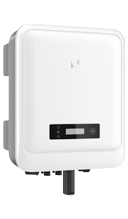 |
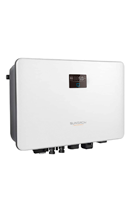 |
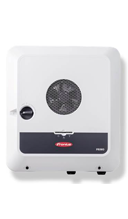 |
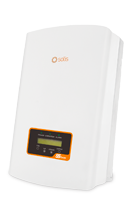 |
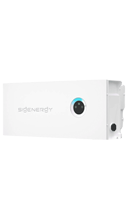 |
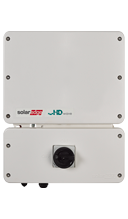 |
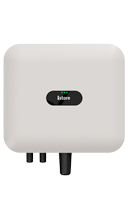 |
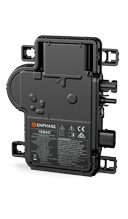 |
| Choose model: | ||||||||
| Price (Approx. AUD price RRP inc. GST) | $890 | $1700 | $2300 | $900 | $1770 | $1,300 | $1,700 | $210 |
| Nominal AC Power (Inverter size) | 5000 W | 4999 W | 5000W | 5000 W | 5000 W | 5000 W | 5000W | 360W |
| Average efficiency | 97.9% | 97.8% | 97.6% | 97.6% | 98.0% | 99.2% | 98.4% | 97.3 % |
| # of MPPT’s | 2 | 3 | 2 | 2 | 2 | N/A (uses optimisers) | 2 | N/A |
| Dimensions | 350 × 410 × 143 mm | 490 * 340 * 170 mm | 530 x 474 x 165 mm | 310 * 543 * 160 mm | 700 x 300 x 260 mm | 450 x 370 x 174 mm | 365 x 365 x 156 mm | 212 mm x 175 mm x 30.2 mm |
| Weight | 13 kg | 19 kg | 15.4 kg | 12 kg | 18 kg | 11.4 kg | 12 kg | 1.1 kg |
| Single phase or three phase? | Single phase | Single phase | Single phase | Single phase | Single phase | Single phase | Single phase | N/A |
| IP Rating | IP65 | IP 65 | IP 66 | IP 65 | IP 66 | IP 65 | IP 65 | IP 67 |
| Ambient temperature range | -25 ~ +60 deg C | -25 ℃ to 60 ℃ | -40°C - +60°C | -25 ~ +60°C | -30 - +60°C | -40ºC to +60ºC | -25°C to 60°C | -40ºC to +65ºC |
| Standby consumption | <1W | < 3 W | < 10 W | <1 W | <5W | <5W | < 2.5W | <1W |
| Network connection | RS485, WiFi, LAN | WLAN, Ethernet, RS485, DI, DO | Fronius Solar.web, Modbus TCP SunSpec, Fronius Solar API (JSON) | RS485, Optional: Wi-Fi, GPRS | WLAN / Fast Ethernet / RS485 / Sigen CommMod (4G/3G/2G) | RS485, Ethernet, Wi-Fi | RS485; WLAN/Ethernet via Smart Dongle-WLAN-FE; 4G / 3G / 2G via Smart Dongle-4G (Optional) | Power Line Communication (PLC) |
| Warranty | 10 years | 10 years | 10 years | 10 years | 10 years | 12 years | 10 years (+2 years parts warranty for units installed up to July 2025) | 25 years |
| Screen? | Yes | Yes | No | Yes | No | No | No | No |
| Built in DC isolator? | Yes | Yes | Yes | Yes | Yes | Yes | Yes | N/A |
| Cooling (passive/fan) | Passive | Passive | Fan | Passive | Passive | Passive | Passive | Passive |
| Noise (db) | <25 db | < 30 dB | <51 dB | < 30 dB | <29 db | <25 dba | <29 dB | <20 db |
| Datasheet Supplied? | Yes | Yes | Yes | Yes | Yes | Yes | Yes | Yes |
| Warranty Supplied? | Yes | Yes | Yes | Yes | Yes | Yes | Yes | Yes |
| Modern slavery statement or forced labour policies? | ||||||||
| More information on brand | Here | Here | Here | Here | Here | Here | Here | Here |
Note: The prices displayed above are our best estimate of retail pricing, including GST.
Table of Contents
- What is a solar inverter, and what does it do?
- Types of inverters
- Which solar inverter brand is best?
- Budget vs. premium solar inverters
- Inverter brands for dummies
- What to look for in a good inverter
- How to spot a bad one
- Solar inverter reviews
What Is A Solar Inverter – What Does It Do?
All grid-connected solar (and battery) systems require an inverter. It’s a box of power electronics with more functions than you might think.
A fully featured, modern inverter should:
- take the high-voltage DC power output from your solar panels (up to 1,000V DC)
- convert it to 230V AC for home appliances
- manage battery charging and discharging (if it’s a hybrid/battery inverter)
- find the optimum voltage and current to push into your solar array every few seconds using one or more Maximum Power Point Trackers
- export surplus solar to the grid – whilst respecting any local export limits
- allow flexible exports depending on your location
- allow a remote ‘emergency shutdown‘ signal to stop exports when the grid is under stress
- if you don’t have a battery, shut down immediately if it senses a grid outage (technical term: Anti-Islanding Protection.)
- provide monitoring via an app that, at a minimum, shows solar generation, home consumption and grid imports/exports, plus battery state of charge if you have a battery
- alert you to faults with alarms, whether that’s a flashing light, an annoying beep, an email or app notification
- provide a software interface to help other appliances, such as EV chargers, know how much solar is available
So it’s pretty important to get a decent one.
Types Of Solar Inverters
The right inverter depends on whether you’re buying solar only, solar and a battery together, or adding a battery to an existing solar system. Consider the following types:
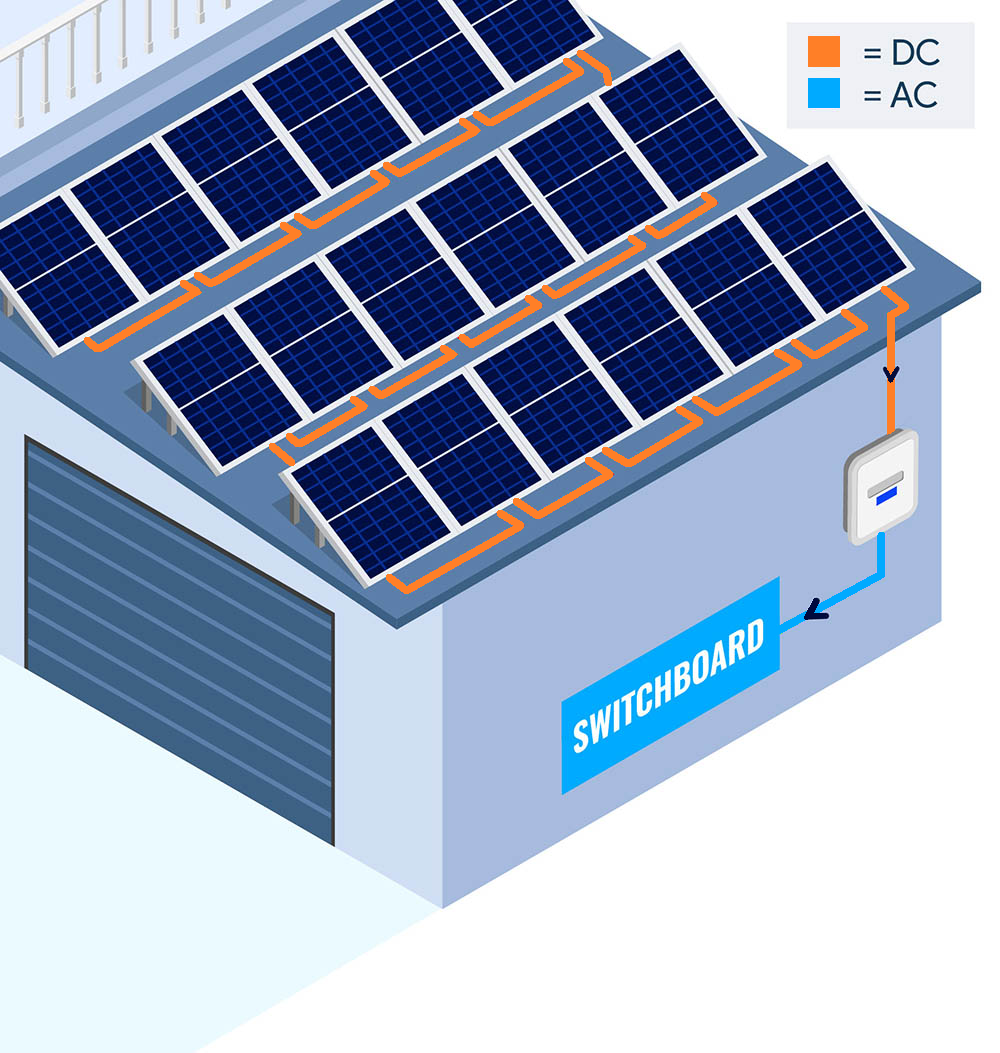
a) String Inverters
If you’re buying solar only and you’re confident you won’t add a battery, a good solar-only string inverter is still fine. They’re the most common type available and are called string inverters because panels are wired together in series strings. These units are usually installed on the wall, ideally close to your meter box.
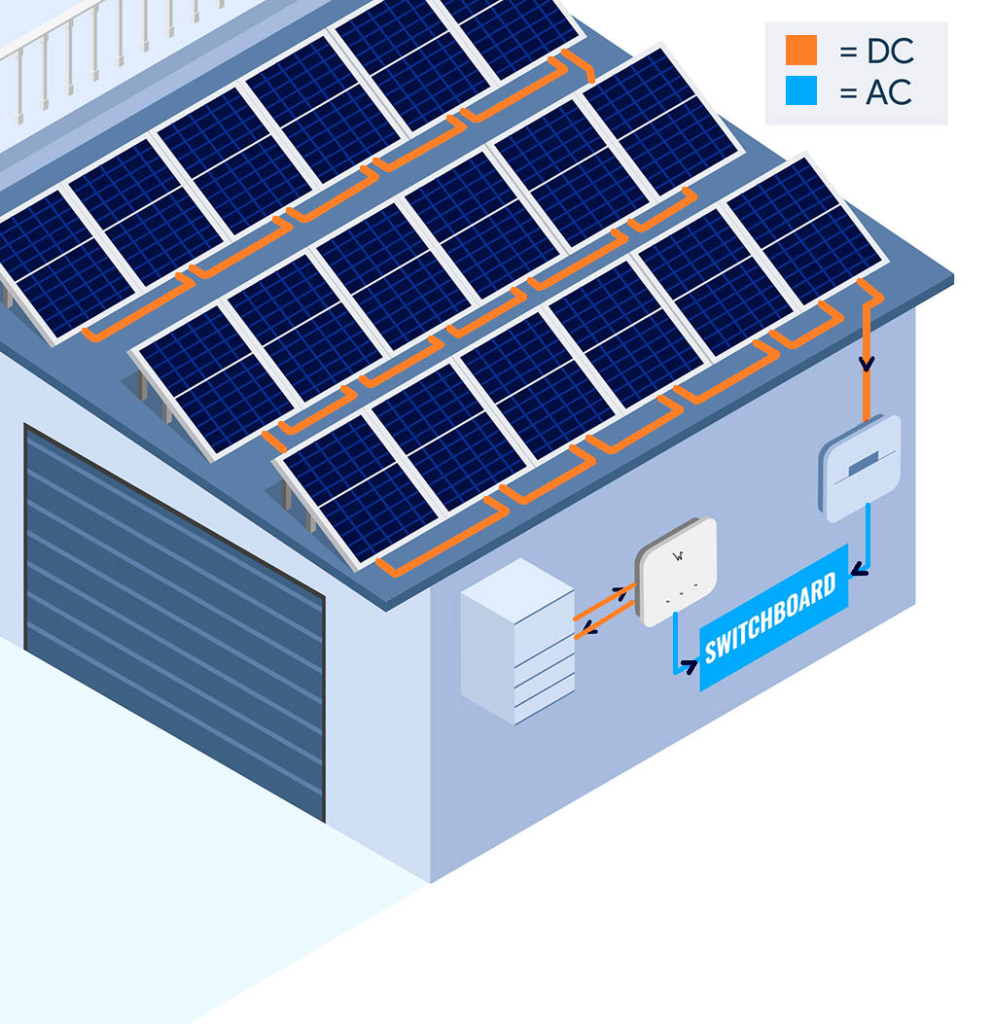
b) Battery Inverters
If you already have solar and your existing inverter is still working well, an AC-coupled battery with its own battery inverter may be the better retrofit. This allows you to leave your solar inverter as-is.
This flexibility lets your battery system be separate from your solar panels (i.e. not connected straight to the same inverter).
The battery inverter simply monitors export or import from the grid in real-time and then charges or discharges as needed, to reduce or eliminate grid power use.
c) Hybrid Inverters
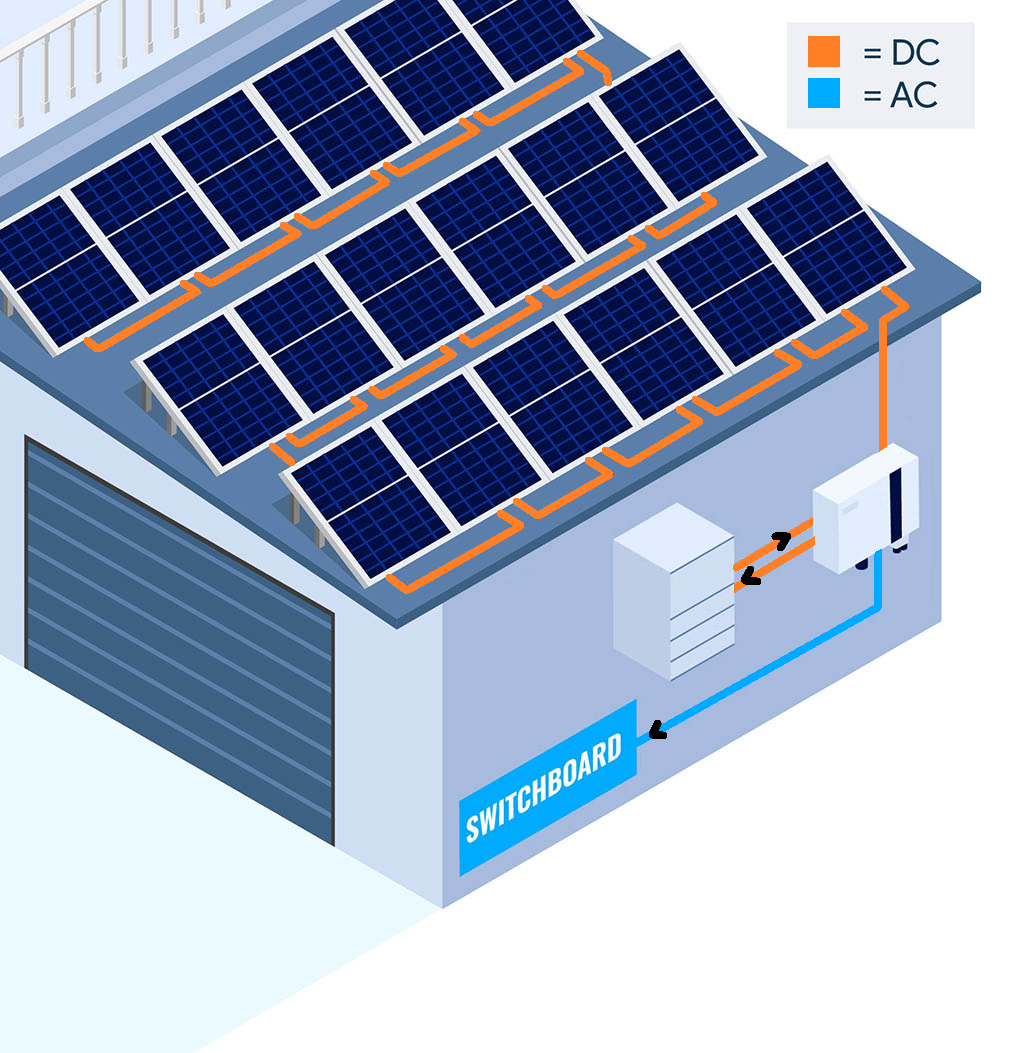
If you’re buying solar and a battery together, or you’re likely to add a battery soon, a hybrid inverter usually makes more sense. It can charge a compatible battery directly from the solar panels on the DC side, which usually means a neater, more efficient system.
With the federal government’s battery rebate, batteries are more affordable than they used to be. It’s worth pricing a hybrid inverter from day one, especially if you’re likely to add a compatible DC-coupled battery later.
The electronics of the hybrid inverter coordinate the battery charging with direct current, straight from the solar array, so there are fewer conversion losses and more capacity to charge the battery and simultaneously run AC loads in the house.
 I’ve listed all the makes and models I know about on my hybrid inverter comparison table. Check it out if you are considering buying batteries with your solar power system, or adding batteries in the next year or two.
d) Modular Hybrid Inverters
More and more modular battery models include a hybrid inverter as a top module in their battery stack. This modular design is more straightforward to install because it eliminates DC battery wiring, saving money on installation costs.
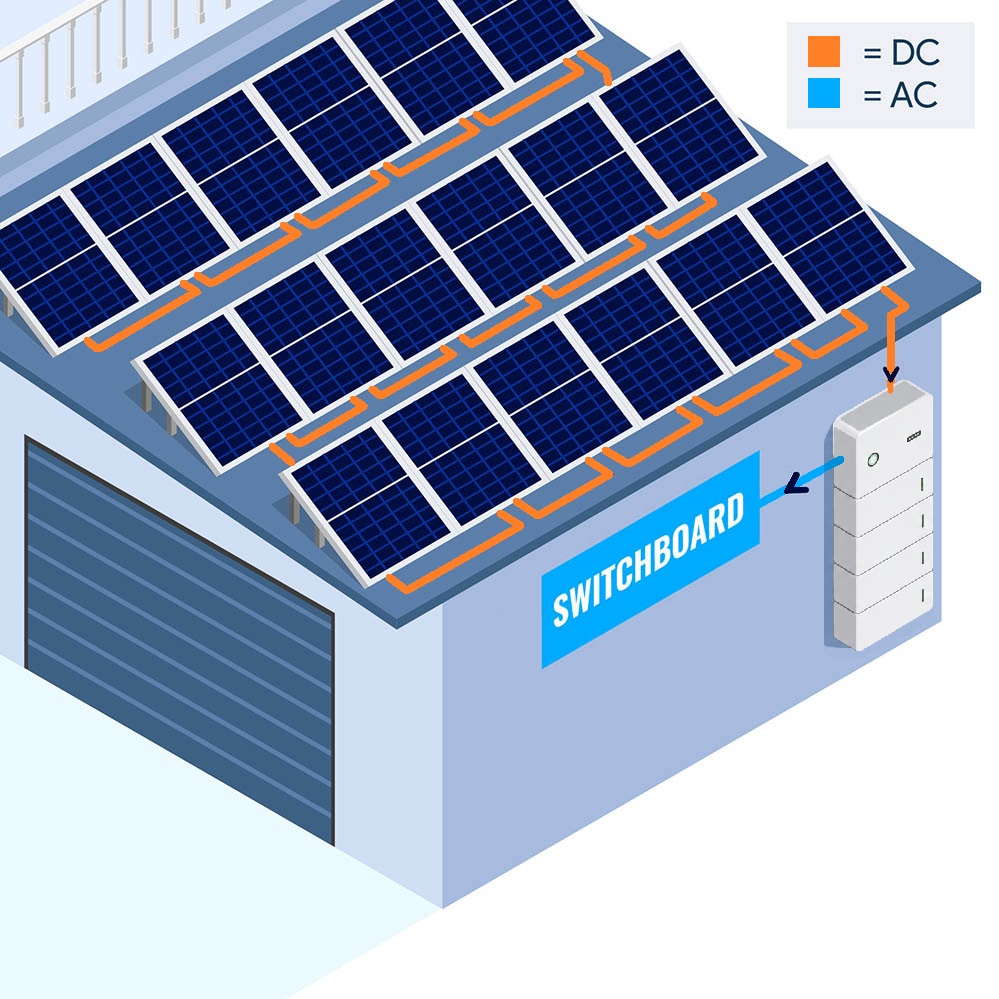
Sigenergy pioneered this style of inverter installation, as a part of their “five-in-one” SigenStor battery system.
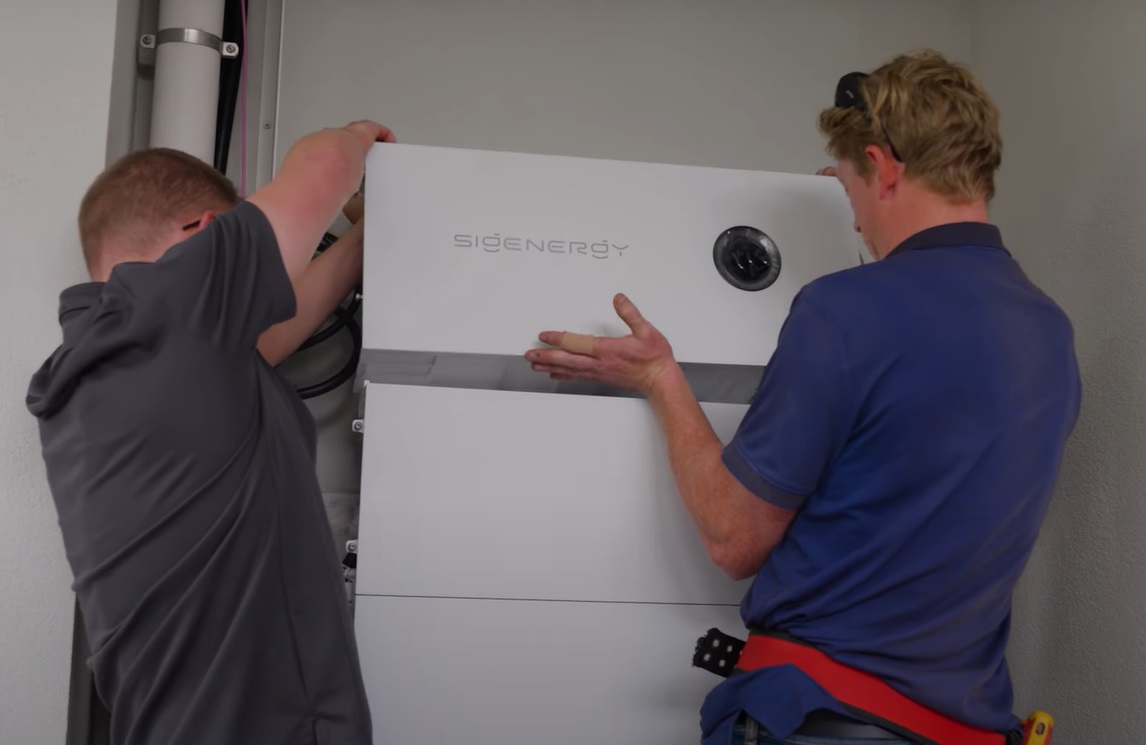
The hybrid inverter module simply stacks on top of Sigenergy’s battery modules.
Other battery brands, like GoodWe, Alpha-ESS, and Anker SOLIX, have taken notice and now also include their hybrid inverter as a module in the stack.
e) Microinverters
Microinverters are tiny solar inverters about the size of a paperback book. You generally need one micro-inverter per solar panel, although some models can handle the output from two, four, or even more modules. You can read about the advantages of microinverters here. The main benefits are they operate at a safer, lower voltage and have design flexibility for complex roofs.
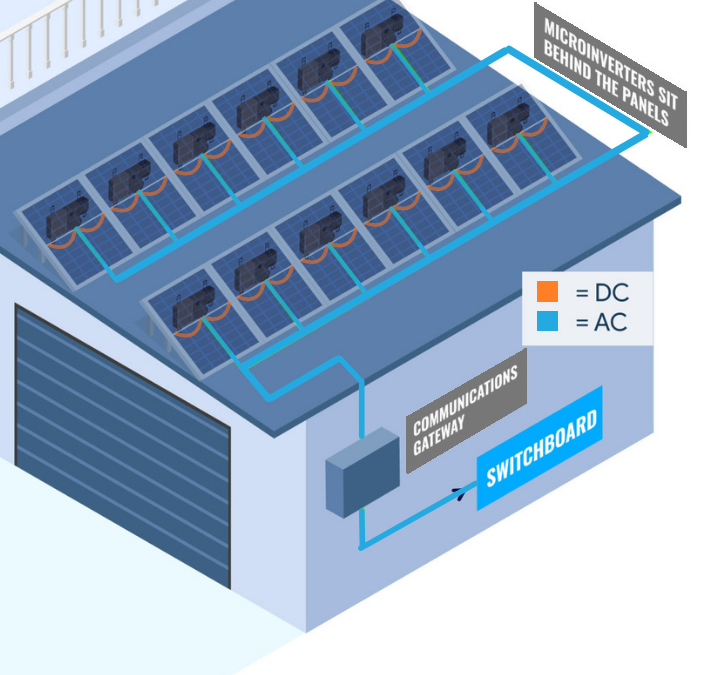
Microinverters can also be helpful if you have partial shade conditions. However, good string inverters are catching up with shade tolerance through increasingly advanced MPPT algorithms.
In my opinion, the only microinverter brand worth considering is Enphase. I’ve got 35 of them on my straw house.
f) Optimised String Inverters
These provide similar performance benefits to microinverters with different technology. An optimiser system requires a string inverter with optimisers on each solar panel. These devices work to maximise each panel’s output under a variety of conditions.
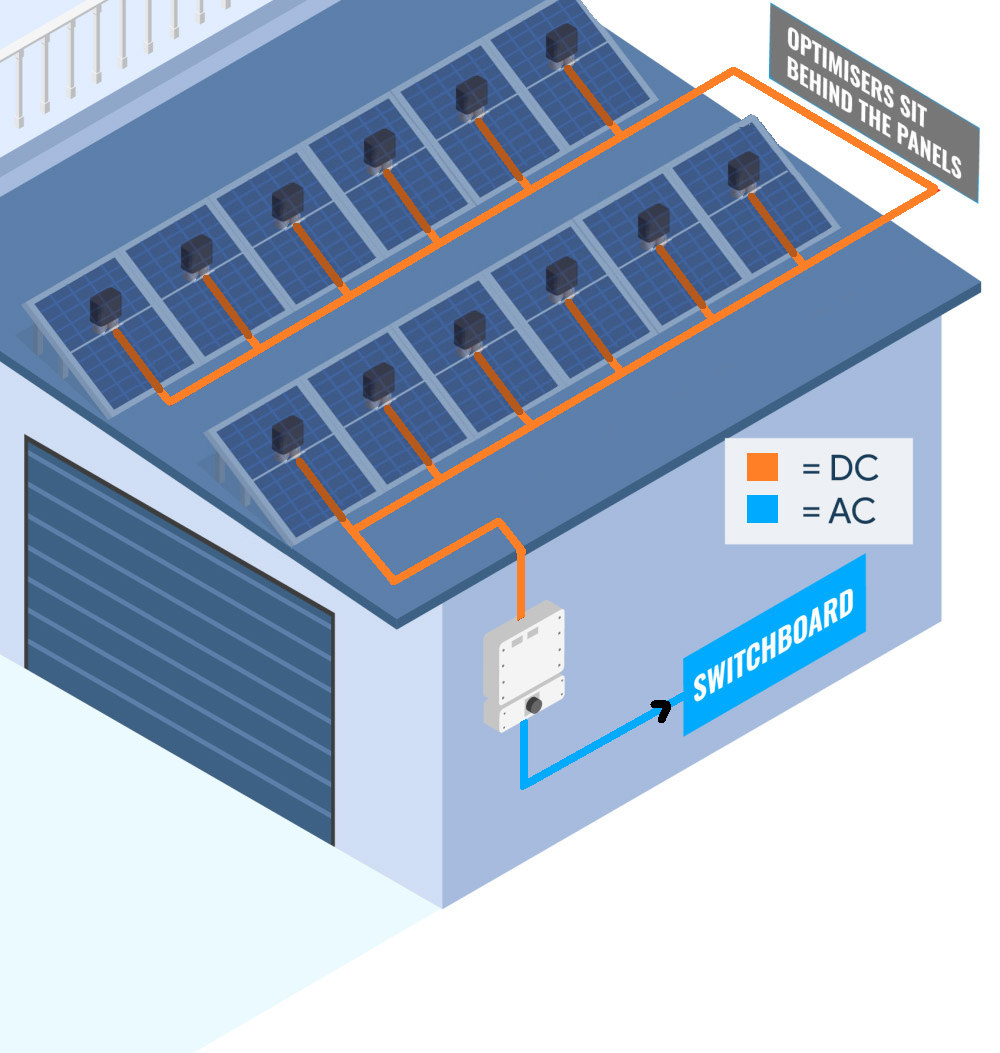
SolarEdge optimisers require you to optimise every panel in an array and use a SolarEdge inverter.
Formerly known as Huawei, the locally supported iStore systems are more flexible than SolarEdge because they can deploy optimisers selectively, and iStore MPPT inverters work across a broader voltage range instead of just a simple target voltage.
Tigo optimisers are inverter agnostic, which can keep costs down because you can also deploy them selectively if the shade only affects a couple of panels. However, there is an extra cost to add Tigo monitoring hardware, an option that gives you panel level data, which is particularly handy to know if the panel or the Tigo itself has failed.
Which Solar Inverter Brand Is Best?
That depends on who you ask. In making your inverter choice, you should consider the following opinions:
According to Installers
According to 125 Aussie installers, the best solar inverter in 2026 is Sungrow followed by Sigenergy, and Fronius,.
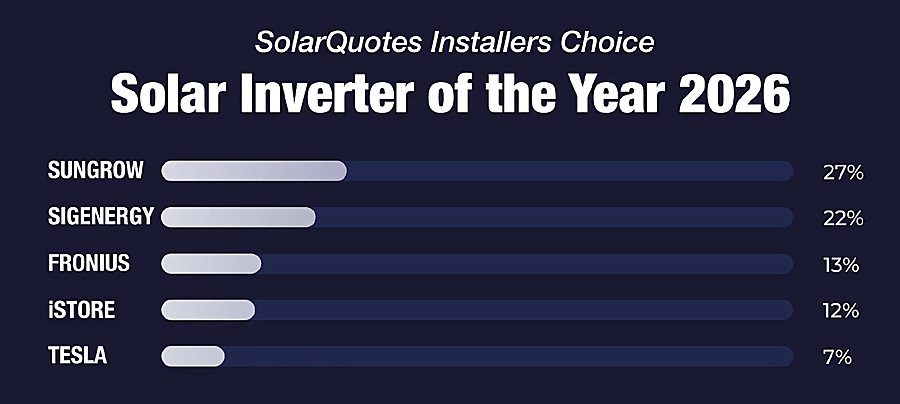
According to SolarQuotes
These are the inverter brands we would comfortably recommend to our grandmothers:

Budget vs. Premium Solar Inverters
When buying solar, your installer will likely give you the choice of a ‘budget’ or ‘premium’ solar inverter. Is it worth paying more for premium?
A premium inverter may:
- have a longer warranty
- have better support
- have a better monitoring app
- handle shade better
- allow more flexible solar array design
- and last longer
…than a cheaper inverter, and command a price premium:
| Inverter size & phases | approx. extra $ for premium (Fronius, SolarEdge) |
|---|---|
| 5kW Single-Phase | $1,000 |
| 5kW 3-Phase | $1,200 |
| 10kW Single-Phase | $2,000 |
| 10kW 3-Phase | $2,200 |
| 15kW Single-Phase | / |
| 15kW 3-Phase | $3000 |
Only you can decide if the extra money is worth it. Ask the quoting installer what benefits your extra money gives you over a good budget option. Personally, I always look for mid-range (e.g., Sungrow, iStore) or premium (e.g., Enphase, SolarEdge, Fronius) inverters. I know they are less likely to give me grief over the years.
Inverter Brands For Dummies
I’m guessing you don’t know one brand of solar inverter from another – you certainly aren’t alone. Here are the inverter brands available in Australia I would comfortably recommend to people:
The simplest, quickest way I can think of to describe how each brand stacks up is to compare them to cars – because I’m also guessing most of you will know the difference between a Mercedes, a Ford and a Hyundai.
If Solar Inverters Were Cars…
-


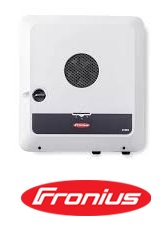
- Top quality
- European made
- Expensive
- Lots of features
- Great Performance
- Fronius reviews
-


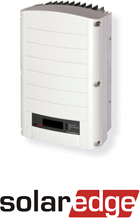
- High quality
- Innovative
- Upper mid-range
- Lots to play with
- Great Hybrid models
- SolarEdge reviews
-

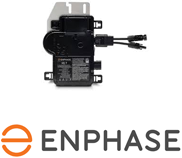
- Top Quality
- Innovative
- Teeny Tiny
- You either love ‘em
or hate ‘em - Enphase reviews
-

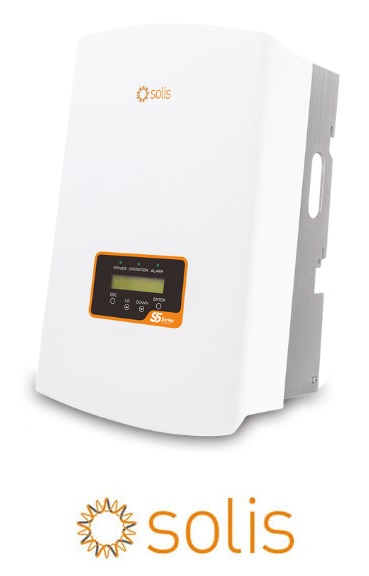
- Cheap but pretty good
- Excellent Australian support
- Long history
- Massive parent company
- Solis reviews
-


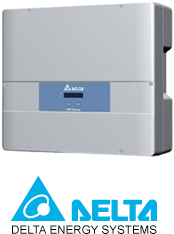
- Built like a tank
- Looks like a tank
- Safe choice
- European Heritage
- Long history
- Delta reviews
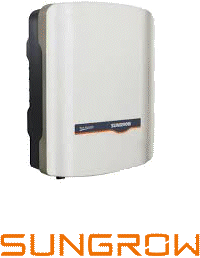
-


- Cheap
- Reliable
- Well Supported
- Great with batteries
- Sungrow reviews
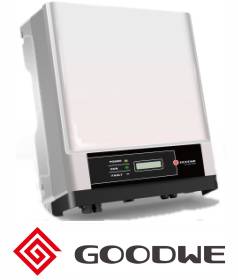
-


- Cheap
- But quite good
- Made in Asia
- Have improved recently
- Goodwe reviews
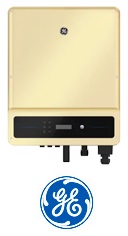
-
- Rebadged Chinese Units
- Made in Goodwe factory
- Weird colours
- Good value
- GE reviews
-


- German brand
- Made in China
- Boring but reliable
- Sunways reviews
-

- New brand for Australia
- Looks impressive
- Complete eco-system
- Still to prove themselves
- iStore reviews










What To Look For In A Good Solar Inverter
1) Can it be used in Australia and is it Clean Energy Council approved?
When choosing a solar inverter, the first thing to look for is whether it complies with the relevant Australian Standard (AS4777). You can quickly check this by checking out the Clean Energy Council’s approved products list.
All grid-connected solar inverters certified for Australia should be on this list. If one you’re considering isn’t, don’t buy it, as your Distributed Network Service Provider (DNSP) likely won’t permit you to install it.
Another reason to buy CEC-approved inverters as part of your full system is to be eligible for Australia’s solar rebate, which can knock thousands off the up-front cost of a system. Note that the device must be on the Clean Energy Council-approved list at the time of installation to be eligible for the subsidy.
It’s also worth looking at the company behind the product—how long has it been around? Do they have an Australian office? What is their track record in Australia with warranty claims? Again, this is where our reviews section can help.
2) How much does a good inverter cost?
A decent-quality 5kW solar inverter, which can support up to 6.6kW of panels, starts at $1,000 for budget single-phase models (e.g., Sungrow, Goodwe, or Solis) and up to $2,000 for premium single-phase models (e.g., Fronius) .
If you want a 3-phase, 5kW inverter; add around $400 to those prices.
Tip: While the price is steeper, if you have a 3-phase power supply at your house, I recommend getting a 3-phase inverter.
Whatever you do, never buy the cheapest solar inverter on the market! Trust me on this, really cheap products have no chance of lasting 15+ years in Australia. It is difficult and expensive to design and manufacture a good solar inverter that will endure, particularly in Australia’s often harsh conditions.
3) What is the best solar inverter size (capacity) to buy?
There’s often confusion about inverter capacity, but generally, it should be less than solar panel capacity.
Your inverter needs to handle the maximum power your system can generate. For example, a 5kW solar system needs 5kW of panels and a 5kW inverter. Simple, right? Actually, it can get more complex.
According to Australian guidelines, the size of your solar panel array (in kW) can be up to one-third larger than the inverter capacity. This practice is called “oversizing” and is common and recommended.
Tip: If you buy a battery with your solar, you can exceed this limit. A good installer will explain how to do this.
Generally, it’s best to install as many panels as you can afford and fit on your roof. Buy a good-quality inverter to suit, staying within any limits set by your local electricity network.
4) Where should you install your inverter?
Inverters are generally installed as near as practicable to your electricity meter and should always be situated in the shade for best performance. Note that a shaded installation location can also be a warranty requirement. If you don’t have a suitable shady spot, then you should have a simple shade cover made or purchased for it. There are model-specific covers available, or a cheaper option is a small awning available from hardware stores.
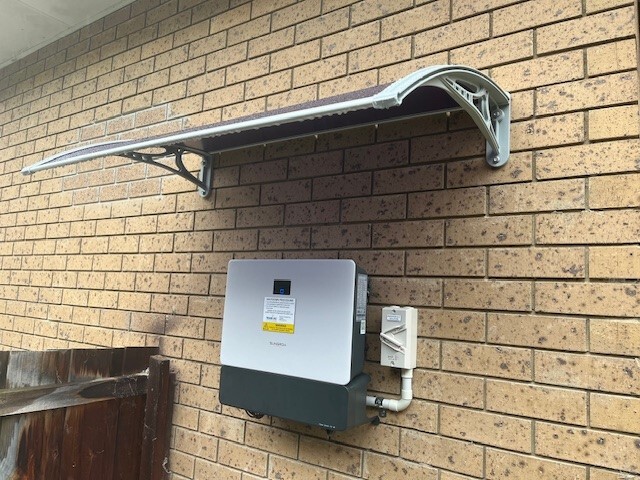
Image credit: Teaslec
5) Is your inverter weather-proof?
Most grid-connected inverters are weather-proof (generally IP65 rated) so they can be located in areas with exposure to the elements.
Your solar inverter is a box of sensitive electronics. The better you protect it from heat and weather, the better it will perform and last.
Check these aspects on specification/warranty documentation, or ask your retailer where to install your solar inverter and how they intend to protect it if necessary.
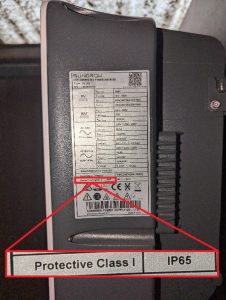
Check the spec label on your inverter for its IP rating to find out how weatherproof it is.
6) How long will the inverter last, and what’s the warranty?
Typically, grid-connected inverters last from 10 to 20 years and you should expect most good-quality units to have a lifespan of 10 years minimum.
Solar inverters have warranties ranging from 5 to 15 years. An increasing number of manufacturers offer service warranty extensions to those willing to pay for them. Obviously, the longer the warranty, the more protection you have.
Some manufacturers (such as Fronius) offer a “5 + 5” year warranty – where parts and labour are covered under warranty for the first 5 years, but only parts are covered for years 6-10. If yours conks out in year 7, you’ll need to pay around $300 in labour costs to replace it.
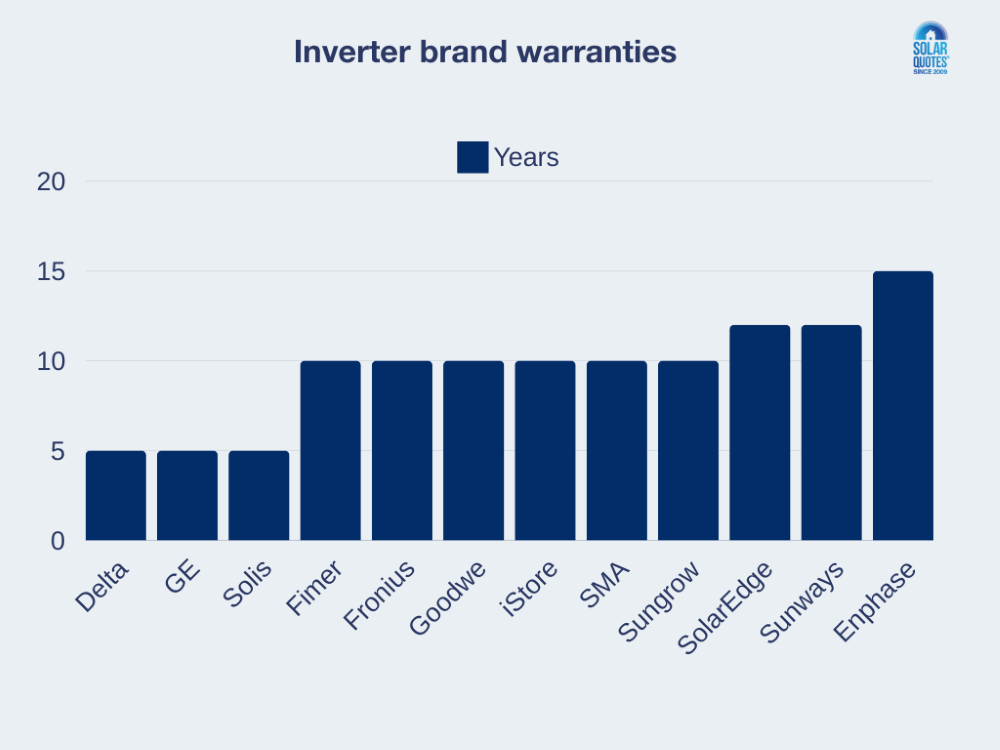
Check out the unit’s warranty and balance this against other features of your system to help you make an informed decision on which solar inverter is best for you. Scrutinise the warranty carefully for any unreasonable conditions and determine where repairs will occur. If it has to be shipped overseas for repairs, you could wait for a long time for a fix or replacement.
Remember: while Australian Consumer Law can trump what a manufacturer states in a warranty, you don’t want to have the stress and unpleasantness of a drawn-out claim if something goes wrong.
7) Is the inverter expandable?
If you’re considering expanding your solar system down the track, it’s a good idea to plan ahead. While adding more panels later is definitely possible, it requires some forethought.
Most solar inverters in Australia come with two or more MPPTs (Maximum Power Point Trackers). These MPPTs allow your system to manage different sets of solar panels. If you want to expand later, it’s crucial to leave one or more MPPTs free during the initial installation. This way, you can easily connect more panels down the line, even if they’re different from your original ones.
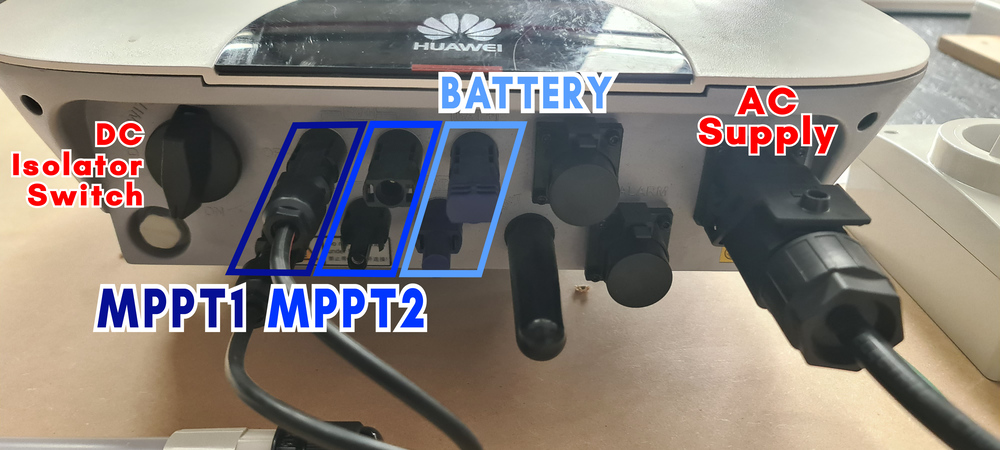
However, solar technology moves fast. The panels available now may not be compatible with your system in a few years, due to rapid advancements. Both inverters and panels are subject to approvals, and if a product falls off the approved list, you might not be able to claim government rebates like STCs (Small-scale Technology Certificates).
If flexibility is your priority, you might want to consider microinverters like Enphase. These manage each panel individually, making it simpler to add on later. But even with microinverters, you could still face challenges, such as changing approval rules from your energy network.
8) What about the display and remote monitoring?
Most solar inverters have display lights indicating whether the unit is on, off, or on standby.
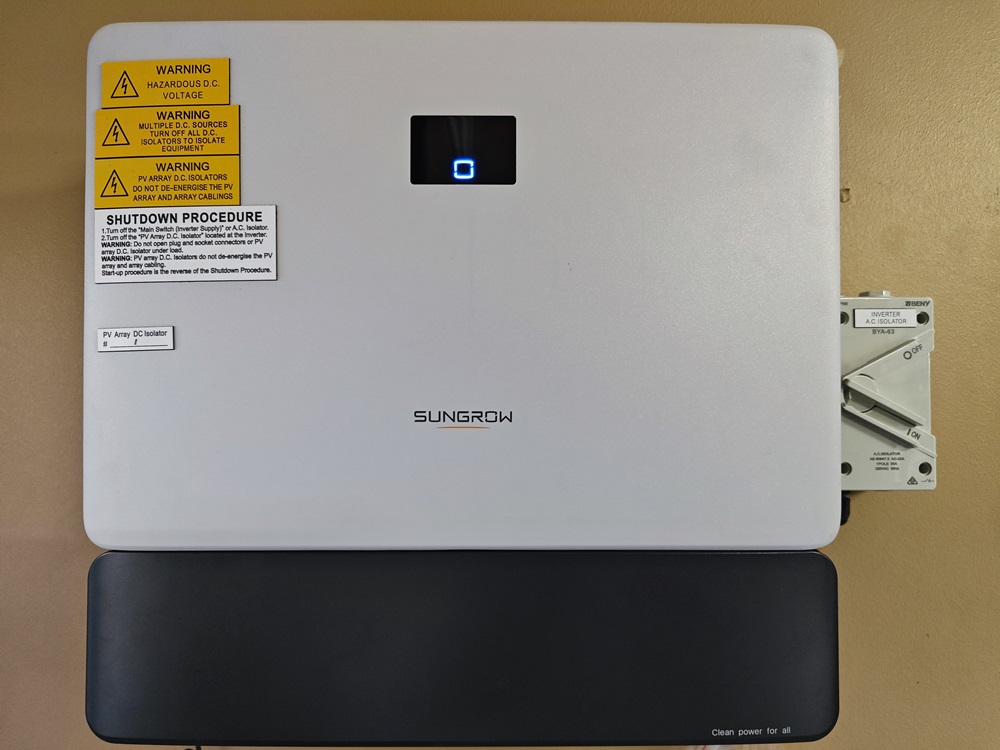
A Sungrow inverter with a blue light, indicating that it is on stand-by. Image credit: Solar Saving
They can also have digital displays that indicate some or all of the following information:
- the amount of energy (kilowatt hours) generated that day,
- the amount of electricity (kilowatt hours) produced since the unit was installed,
- the amount of power (kilowatts) the system is currently generating,
- the number of hours the unit has been producing power,
- error codes
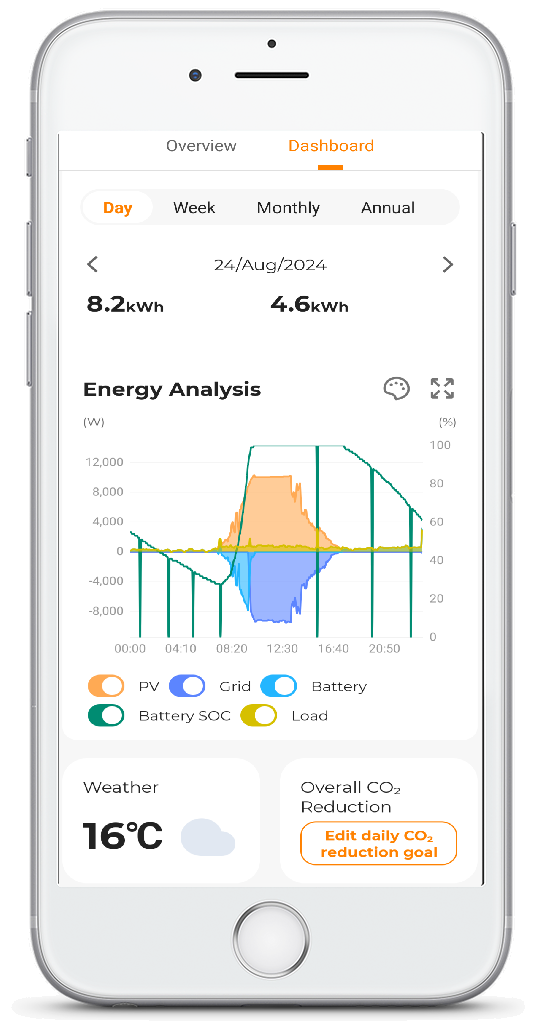
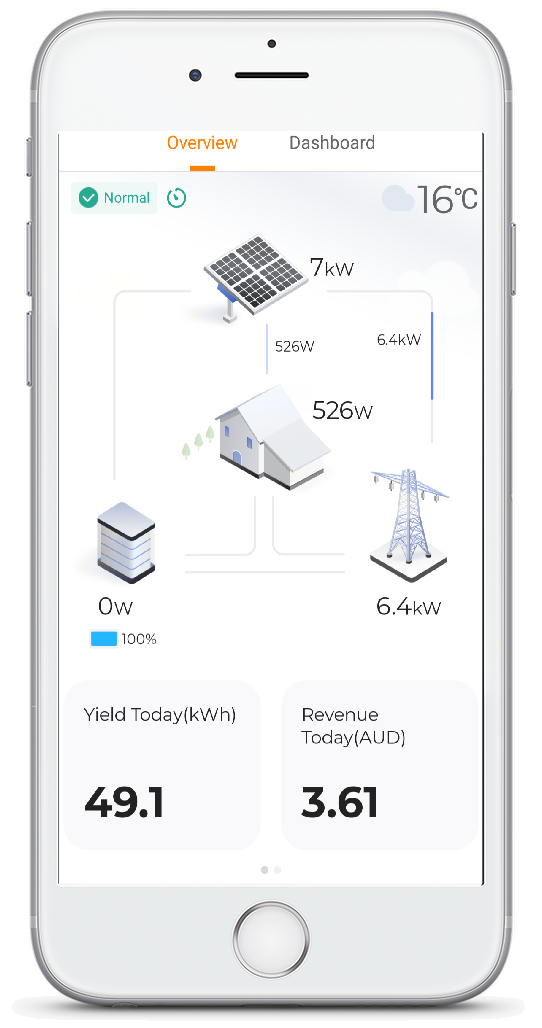
Nearly all inverters also offer an app that allows you to view detailed performance information and alerts more easily on your PC or phone.
9) How efficient is a grid-connected inverter?
Inverter efficiency measures how well a device converts the electricity it receives from the solar panels into power that can be used by your home or exported to the grid. Older grid-connected transformer-based solar inverters have an efficiency of around 93% or better, while the transformer-less devices sold today are typically around 96% or better.
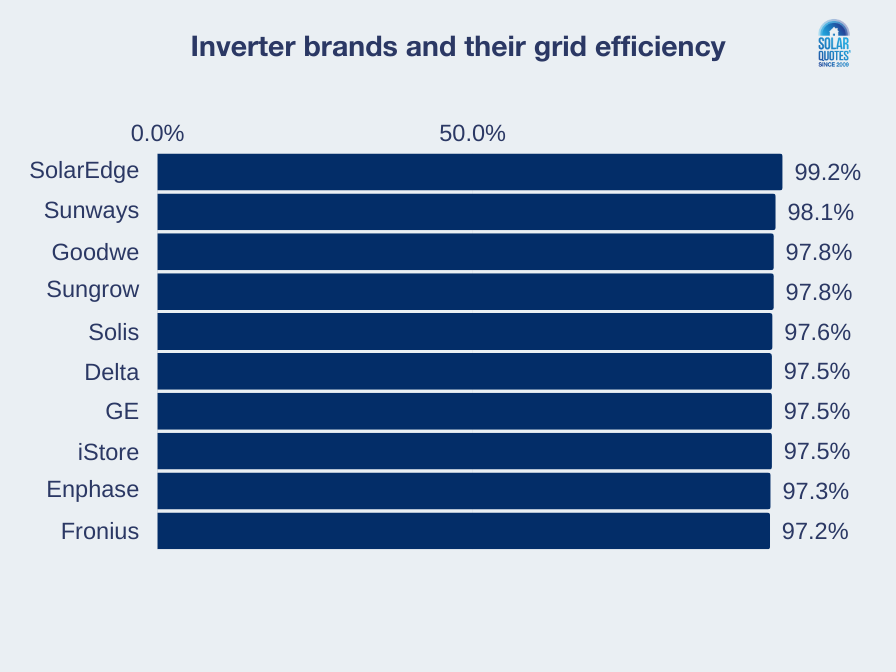
Higher efficiency is generally better, but some inverters—such as Fronius—have active cooling. This can increase the unit’s lifespan but give them a slightly lower efficiency rating than inverters without it. So, higher efficiency isn’t always necessarily superior.
An inverter’s standby power consumption, for example, during the night or in other very low lighting conditions, also impacts overall output, but this draw is tiny – usually in the range of 1 to 5 Watts, although 5 Watts would be considered high.
How To Spot A Bad Solar Inverter
Most solar inverters supplied by reputable retailers in Australia are OK, with the emphasis on “most.” However, some horrible devices still being installed today have somehow managed to pass Australian compliance testing. These will likely cause their owners some heartache and hip pocket pain down the track, so make sure you’re not one of them.
Note: walk away if there is no written warranty offered on the solar inverter or no specification sheet is supplied. And make sure the organisation issuing the warranty has an Australian office – you don’t want to be calling Shanghai if you have warranty-related issues!
And bear in mind that even the best solar components can be negatively impacted by poor installation, so choosing a good accredited installer is as important as choosing the right device.
Solar inverter reviews
If you want to read reviews on specific inverter brands, we have assembled a review database from real Aussie homeowners who have first-hand experience with these brands.
Get quotes
If you want to be sure of getting a good inverter as part of a system purchase, get a quote from installers I trust here: